← डेस्क पर लौटें9 मिनट का ब्रिफ

फुल ब्रिफ

15 Iconic Cats in Art History Every Feline Fan Will Adore

As the proud human of Pimpa the Cat — the laziest furball to ever grace a sunbeam — I’m on a mission to share all things cat-related with the world. To that end, I’ve rounded up 15 of the most purrfectly charming cats from art history, each one worthy of a spot on any cat lover’s wall. In some of these masterpieces, cats take center stage; in others, they’re subtle sidekicks. But let’s be real — in every scene they grace, cats are the true stars. After all, they rule the world, one elegant stretch at a time. Enjoy!

C

Catherine

डेस्क रिपोर्टर

कॉन्टेक्स्ट

पढ़ते समय संदर्भ नोट्स साथ रखे गए हैं।

लाइन

डेली सिग्नल
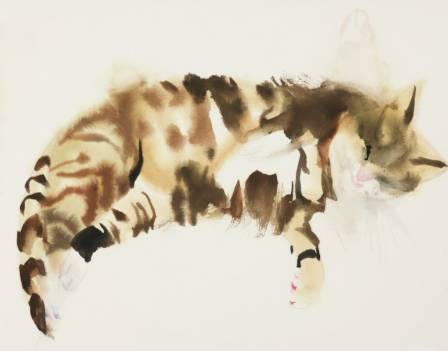
As the proud human of Pimpa the Cat — the laziest furball to ever grace a sunbeam — I’m on a mission to share all things cat-related with the world. To that end, I’ve rounded up 15 of the most purrfectly charming cats from art history, each one worthy of a spot on any cat lover’s wall. In some of these masterpieces, cats take center stage; in others, they’re subtle sidekicks. But let’s be real — in every scene they grace, cats are the true stars. After all, they rule the world, one elegant stretch at a time. Enjoy!

1. Louis Wain, The Bachelor’s Party

Louis Wain and his whimsical cats deserve an entire book to themselves! A beloved English illustrator born in 1860, Wain shot to fame for his anthropomorphic cat creations — portraying felines in all sorts of human-like scenarios. As the renowned English writer H.G. Wells put it, “he invented a cat style, a cat society, a whole cat world.” Wain struggled with mental illness, likely schizophrenia, which may have fueled his deep, enduring obsession with cats. He went on to become a leading authority on all things feline, serving as president of the National Cat Club, judging cat shows, and supporting various animal charities. For nearly 30 years, he churned out hundreds of drawings annually — works that continue to delight cat and art enthusiasts to this day.

2. Franz Marc, The White Cat

Franz Marc is celebrated for his vividly colored paintings of animals, from horses and dogs to, of course, cats. In 1911–1912, he exhibited his works in Munich, where his cat paintings stood out for capturing the creatures in their most natural states: curled up napping or grooming themselves with meticulous care. Some of his most famous cat-centric pieces depict felines perched on pillows, a pair of cats in bold blue and yellow hues, cats nestled in a basket, and cats lounging on a red cloth. To Marc, animals embodied the ideal of purity, truth, and beauty. He also ascribed symbolic meaning to colors: blue represented spirituality and masculinity, yellow signified feminine joy, and red stood for violence.

3. Hiroshige II, A White Cat Playing with a String

This charming fan print is a standout work by Hiroshige II, an artist who often followed in the footsteps of his wildly successful mentor — who also happened to share the name Hiroshige. Yet this piece showcases Hiroshige II’s own distinct artistic voice, marked by keen observations of household cats rendered in a bold, minimalist style. The print features a plump, white bobtail cat gnawing on a blue string, its hind legs planted firmly on the ground as if poised to pounce at any moment. If you’re a cat owner, that mischievous, focused expression will feel instantly familiar!

4. Suzanne Valadon, Raminou

Suzanne Valadon was a trailblazing French painter and artist’s model. In 1894, she made history as the first female painter admitted to the Société Nationale des Beaux-Arts. Valadon’s portfolio included still lifes, portraits, floral arrangements, and landscapes, all defined by strong compositions and vibrant color palettes. Still, she was best known for her unflinching, candid depictions of female nudes — works that offered a uniquely woman’s perspective on the human form. A devoted cat lover, Valadon frequently painted her own felines, with a special soft spot for her chubby, beloved cat Raminou.

5. Marc Chagall, La Poeté

A pioneer of modernism and a towering figure in Jewish art, Marc Chagall lived through modernism’s “golden age” in Paris, where he blended Cubism, Symbolism, Fauvism, and Surrealism into a style all his own. Throughout his long career, his work revisited recurring motifs: village landscapes, peasant life, and intimate glimpses of Jewish village life, all rendered in a dreamlike, otherworldly aesthetic. Cats often played a key role in amplifying the fantastical vibe of his paintings, appearing as loyal companions to the poets, musicians, and women who populated his canvases — as seen in La Poeté.

6. Pablo Picasso, Cat Catching A Bird

Picasso created several versions of Cat Catching A Bird in 1939, the year World War II erupted. As the artist himself recalled, “The subject obsessed me, I don’t know why.” The painting captures a tense, brutal scene: a bird thrashing desperately to escape a cat’s clutches. The stark, neutral background only heightens the horror of the moment, turning a mundane act of nature into a scene of apocalyptic proportions. The cat prolongs the bird’s suffering, savoring every second of its absolute power over its prey.

7. Min-Zhen, The Black Cat

After Picasso’s menacing feline, let’s turn to a much cheerier cat! Min Zhen was a Chinese painter and seal carver born in Nanchang, Jiangxi, who spent most of his life in Hubei. He was acclaimed for his figure paintings and occasional experiments with finger painting. Orphaned at a young age, Min Zhen is sometimes linked to the Eight Eccentrics of Yangzhou — a group of 18th-century Qing Dynasty painters who rejected traditional artistic norms in favor of bold, expressive, and highly individualistic styles. Little is documented about this delightful painting of a plump black cat, but perhaps no words are needed: this chonky feline looks utterly content, as if it’s just polished off every last bite of cat food in existence.

8. Henriëtte Ronner-Knip, The Cat at Play
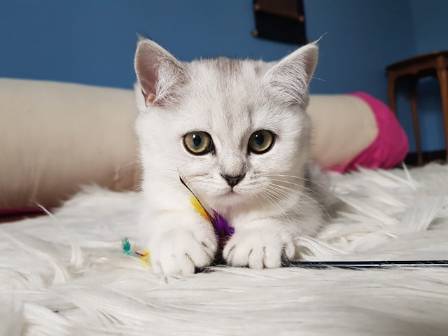
Born in Amsterdam into a family of artists, Henriëtte Ronner-Knip made a name for herself with her heartwarming paintings of household pets — cats, above all else. Pet portraits were all the rage among wealthy Victorians, and Ronner-Knip’s whimsical scenes of cats getting into all sorts of domestic mischief became instant favorites. Her works leaned into sentimentality, eschewing metaphorical depth to focus entirely on the charm and personality of her feline subjects. She studied cats with meticulous care and genuine affection, even building a special studio with a glass front where her cats could roam, nap, and get into all the quintessentially cat-like trouble that inspired her art.

9. Bart van der Leck, The Cat

Bart van der Leck is best remembered as a co-founder of the influential magazine De Stijl. In 1916, alongside Piet Mondrian, he embraced radical abstraction in his work, limiting his palette to the primary colors of red, yellow, and blue. This shift was the result of a quest for a new visual language, sparked in part by a visit to Paris where he was deeply impressed by classical Egyptian art at the Louvre. Inspired by Egyptian art’s simplicity, van der Leck developed a style characterized by streamlined forms and muted hues. In The Cat, he depicts the animal from both side and profile, using nothing more than black, white, red, and orange to bring the creature to life.

10. Pierre-Auguste Renoir, Julie Manet (Child with Cat)

Berthe Morisot and her husband Eugène Manet (brother of the famous painter Édouard Manet) had been close friends with Pierre-Auguste Renoir for years. Admiring his talent, the couple commissioned Renoir to paint a portrait of their daughter Julie in 1887. In the painting, the cat is just a small, sweet addition — but what a delightful one! It looks far happier than little Julie, who wears a somewhat glum expression. Maybe she wasn’t a fan of Renoir’s work, much like some American art lovers would be over a century later.

11. Marguerite Gérard, The Cat’s Lunch

This painting is exactly what my cat looks like when I set down its food bowl! Marguerite Gérard was a celebrated artist who created oil paintings and etchings under the mentorship of her brother-in-law, the great Jean-Honoré Fragonard. Perhaps it was Fragonard — who was also known for including cats in his compositions — that encouraged her to add felines to her own work. A genre painter, Gérard specialized in intimate scenes of domestic life. Unlike many female artists of her time, who often drew inspiration from classical antiquity, Gérard favored costumes and settings from centuries past. Her paintings often explored themes of motherhood, childhood, and female companionship, with a focus on the role of music in daily life. As The Cat’s Lunch proves, feline companionship was equally dear to her heart.

12. Pierre Bonnard, The White Cat

In The White Cat, Pierre Bonnard uses playful distortion to create a humorous image of a cat arching its back in that classic, dramatic feline pose. The artist spent countless hours refining the cat’s shape and paw positions, as evidenced by his surviving preparatory sketches. Japanese art was a major influence on the piece, visible in its bold, asymmetrical composition and its subject matter — a topic that was wildly popular in the Japanese prints Bonnard cherished. Artists like Hokusai and Kuniyoshi (whose work also appears on this list) were famous for their cat paintings, and their influence shines through here. Cats were a recurring motif in Bonnard’s oeuvre, sometimes tucked away as tiny details, other times — as in The White Cat — taking center stage as the main subject.

13. Utagawa Kuniyoshi, Cats Suggested As the Fifty-three Stations of the Tōkaidō

This delightful triptych print by Japanese illustrator Utagawa Kuniyoshi features a whopping 55 cats, each up to its own antics: one peeks out of a basket, a few chase rats, and others feast on fish. Kuniyoshi was absolutely obsessed with cats; his students later recalled that his studio was overrun with the furry creatures. His love for cats seeped into nearly all his best works, with felines appearing as characters from beloved folktales, expressive studies of their natural behavior, and even fully anthropomorphic figures — much like Louis Wain’s cats decades later. Cats Suggested As the Fifty-three Stations of the Tōkaidō is a clever spoof of Hiroshige’s The Fifty-three Stations of the Tōkaidō, the best-selling ukiyo-e series of all time. The Tōkaidō, or “Eastern Sea Road,” was a historic highway with 53 post stations that provided travelers with stables, meals, and lodging. Kuniyoshi reimagined each station through playful cat-themed puns. For example, the 41st station, Miya, sounds similar to the Japanese word oya (parent), so Kuniyoshi depicted it as a mother cat with her two kittens.

14. Théophile Steinlen, Le Chat Noir

Le Chat Noir (The Black Cat) was a legendary 19th-century entertainment venue in Paris’ bohemian Montmartre district. Founded by impresario Rodolphe Salis, it opened its doors on November 18, 1881, at 84 Boulevard de Rochechouart, and closed in 1897 shortly after Salis’ death. It’s widely regarded as the world’s first modern cabaret — a nightclub where patrons sat at tables, sipped drinks, and enjoyed a mix of live performances on stage. Théophile Steinlen’s iconic poster for the cabaret has become a symbol of Montmartre’s golden age. In its heyday, Le Chat Noir was equal parts artist’s salon and raucous music hall. From 1882 to 1895, it also published a weekly magazine of the same name, featuring literature, Montmartre gossip, poetry, and political satire. Today, reproductions of Steinlen’s black cat can be found in shops all across Paris.

15. Jeff Koons, Cat on a Clothesline

Love him or hate him, Jeff Koons’ art is impossible to ignore. A quick glance at a photo doesn’t do Cat on a Clothesline justice — this piece is massive, measuring 312.4 x 279.4 x 127 cm. According to Koons, the work is “like a contemporary crucifixion. But it’s also this cute little cat, that’s just in a sock. You can also think of it as a womb-like situation, feeling that sense of protection.” What the piece means is entirely up to you to decide.

16. Pimpa the Cat

Last but never least — meet Pimpa, the ultimate mascot of DailyArt. I can’t help but daydream: what if one of the great Dutch Golden Age masters had painted his portrait? Or, barring that, even Hieronymus Bosch — his quirky, imaginative style would have been the perfect match for Pimpa’s one-of-a-kind personality.

अगली रिपोर्टें

दुनिया के 10 सबसे प्रतिष्ठित खेल स्टेडियम: वैश्विक खेल के प्रतीक

दुनिया के 10 सबसे प्रतिष्ठित खेल स्टेडियम: वैश्विक खेल के प्रतीक

प्राचीन काल से ही खेल स्टेडियम सिर्फ एथलेटिक प्रतियोगिता के स्थान से कहीं अधिक रहे हैं; उन्होंने वीरतापूर्ण कार्य, ऐतिहासिक क्षण और बेलगाम जुनून देखा है, जिसने पूरे समुदायों को एकजुट किया है। ये खेल स्मारक केवल भौतिक संरचनाएं नहीं हैं, बल्कि पहचान, राष्ट्रीय गौरव और कई मामलों में विश्व प्रसिद्ध पर्यटन स्थलों के प्रतीक हैं। इस लेख में, हम दुनिया के दस सबसे प्रतिष्ठित खेल स्टेडियमों का पता लगाएंगे, जिनकी भव्यता सीमाओं और पीढ़ियों से परे है।
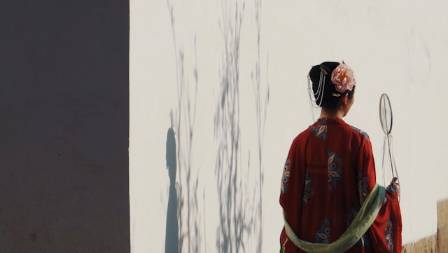
हानफू का रणनीतिक चयन: हर आकृति को आकर्षक बनाने के लिए एक शुरुआती गाइड

हानफू का रणनीतिक चयन: हर आकृति को आकर्षक बनाने के लिए एक शुरुआती गाइड

पारंपरिक हानफू की दुनिया में कदम रखने वालों के लिए, ऐसा परिधान ढूंढना जो सौंदर्य और सही फिटिंग का सही संतुलन बनाए रखे, एक चुनौतीपूर्ण कार्य लग सकता है। हालांकि, आकर्षक दिखने का रहस्य आपके शरीर की बनावट के अनुरूप परिधान चुनने में निहित है। विभिन्न ऐतिहासिक शैलियाँ आपके शरीर के अनुपात के साथ कैसे मेल खाती हैं, यह समझकर आप ऐसा परिधान चुन सकते हैं जो न केवल सांस्कृतिक विरासत का सम्मान करे बल्कि आपके आत्मविश्वास को भी बढ़ाए।

Delhi's Red Fort: The Complete Guide

Delhi's Red Fort: The Complete Guide

Delhi’s magnificent Red Fort, also called Lal Qila, served as the royal residence of Mughal emperors for nearly two centuries until the British took control of it in 1857. However, this impressive fortress represents far more than the wealth and power of the Mughal period.
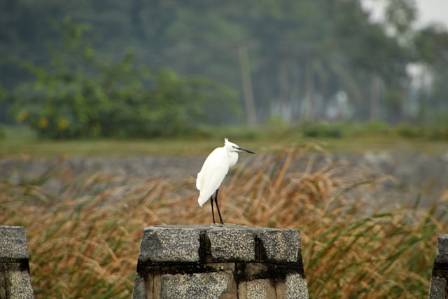
The Cattle Egret: A Global Success Story in Natural Pest Control

The Cattle Egret: A Global Success Story in Natural Pest Control

The Cattle Egret is one of the most resilient and adaptable birds in the world. Originally found in parts of Africa and Asia, this species has achieved an unprecedented level of global expansion, moving into new continents and thriving in diverse environments. From its symbiotic relationship with livestock to its resourceful hunting techniques, the Cattle Egret has become a common sight across nearly every continent.

A Guide To Choosing The Perfect Cream Coffee Table

A Guide To Choosing The Perfect Cream Coffee Table

A cream coffee table can be a beautiful and versatile piece in almost any living room. It adds a soft touch of color and subtle texture while also bringing a sense of elegance and refinement to the space. However, selecting the right cream coffee table involves more than just picking a design you like. In this guide, we’ll explore the main types available and how to choose the best one for your home.
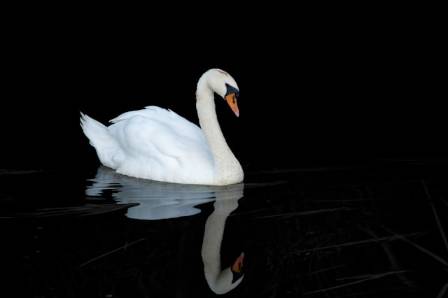
Mute Swan: The Graceful Monarch of UK Waterways—Biology, Behavior, and Conservation

Mute Swan: The Graceful Monarch of UK Waterways—Biology, Behavior, and Conservation

The mute swan (Cygnus olor) stands as one of the most beloved and recognizable waterbirds in the United Kingdom, its presence gracing canals, ponds, lakes, and rivers with unparalleled grace. With its snow-white plumage, long curved neck, and serene glide across the water, this bird has captivated humans for centuries, becoming a symbol of beauty, loyalty, and romance—thanks in no small part to the iconic heart shape formed by mating pairs as they touch necks. Contrary to its name, the mute swan is not entirely silent; it communicates through soft hisses, grunts, and wing flaps, reserving its voice for moments of alarm or courtship. Beyond its aesthetic appeal, the mute swan plays a vital role in aquatic ecosystems, while its adaptability to both rural and urban habitats has made it a familiar sight to nature lovers and city dwellers alike. Protected under UK law and classified as a species of Least Concern (Green status) in the Birds of Conservation Concern 5 report, the mute swan remains a testament to the harmony between wildlife and human environments—though it still faces subtle threats that require ongoing attention.