फुल ब्रिफ
Delhi's Red Fort: The Complete Guide
Delhi’s magnificent Red Fort, also called Lal Qila, served as the royal residence of Mughal emperors for nearly two centuries until the British took control of it in 1857. However, this impressive fortress represents far more than the wealth and power of the Mughal period.
Camille Prescott
डेस्क रिपोर्टर
कॉन्टेक्स्ट
पढ़ते समय संदर्भ नोट्स साथ रखे गए हैं।
लाइन
डेली सिग्नल
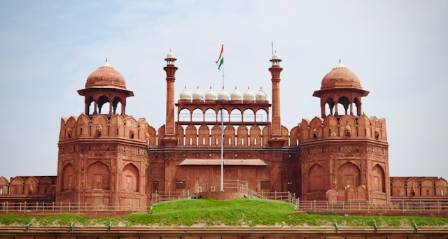
Delhi’s magnificent Red Fort, also called Lal Qila, served as the royal residence of Mughal emperors for nearly two centuries until the British took control of it in 1857. However, this impressive fortress represents far more than the wealth and power of the Mughal period.
Over the centuries, the Red Fort has survived political conflicts, invasions, and dramatic historical changes. It became the stage for several major events that influenced the development of modern India. Today, it remains one of Delhi’s most visited landmarks and an important symbol of the nation’s history.
Because of its outstanding historical and cultural value, the Red Fort was designated a UNESCO World Heritage Site in 2007. The monument is also featured on the reverse side of India’s new 500-rupee banknote introduced after demonetization in 2016.
History and Construction of the Red Fort
The construction of the Red Fort began in 1638 when the fifth Mughal emperor, Shah Jahan, decided to move his capital from Agra to a newly planned city called Shahjahanabad, which is now part of Old Delhi.
The fortress was completed in 1648 after ten years of construction. The famous Persian architect Ahmad Lahori, who also designed the Taj Mahal, was responsible for its design.
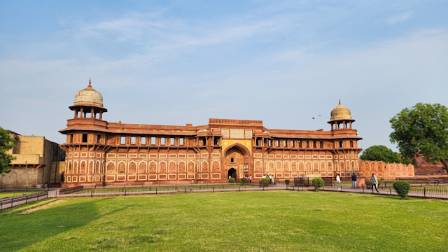
Visitors familiar with Agra Fort may notice similarities between the two structures. Shah Jahan admired the architecture of Agra Fort and used it as inspiration for the Red Fort. However, the Red Fort was built on a much larger scale, covering more than twice the area of Agra Fort, reflecting Shah Jahan’s desire for a grand imperial residence.
The Decline of Mughal Power
Although the Red Fort began as a magnificent symbol of Mughal strength, its golden age did not last for long.
In 1657, Shah Jahan became seriously ill and returned to Agra Fort for recovery. During his absence, his ambitious son Aurangzeb seized control of the empire and placed his father under house arrest in Agra Fort, where Shah Jahan remained until his death eight years later.
After Aurangzeb’s reign ended in 1707, the Mughal Empire gradually weakened. Internal conflicts, succession struggles, and foreign invasions caused the empire’s influence and wealth to decline.
In 1739, Persian ruler Nadir Shah invaded Delhi and looted the Red Fort, taking many valuable treasures, including the famous Peacock Throne created by Shah Jahan from gold and precious stones such as the Koh-i-Noor diamond.
The Fort Under Maratha and British Control
As Mughal authority weakened, the empire eventually submitted to the Marathas in 1752. More wealth was lost in 1760 when the Marathas removed the silver ceiling of the Diwan-i-Khas, the Private Audience Hall, to raise money for defending Delhi against an invasion by Afghan ruler Ahmad Shah Durrani.
Although Mughal emperors continued to hold their titles, their actual power had almost disappeared. Emperor Shah Alam II returned to Delhi’s throne in 1772 under Maratha protection, but the Mughal rulers remained vulnerable to attacks from different groups, including the Sikhs.
In 1803, during the Second Anglo-Maratha War, British forces defeated the Marathas in the Battle of Delhi. The British East India Company took control of the city and began governing Delhi.
The Mughal royal family was allowed to remain in the Red Fort under British supervision until the uprising of 1857 changed everything.
The Red Fort and the Indian Rebellion of 1857
In 1857, Indian soldiers and civilians launched a major rebellion against British East India Company rule. Although the uprising eventually failed, many Europeans were killed, leading to severe British retaliation.
The British accused Mughal Emperor Bahadur Shah Zafar of supporting the rebellion. He was charged with treason, his sons were executed, and he was sent into exile in Burma.
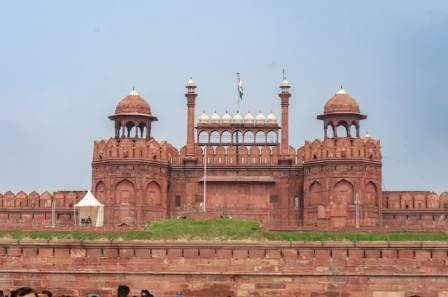
After removing the Mughal rulers from the Red Fort, the British took control of the complex. They destroyed many beautiful structures and gardens, removed valuable items, converted parts of the fort into a military base, and raised the British flag above it.
The fort was also used as a place to display British authority, including during visits by members of British royalty.
The Red Fort’s Role in India’s Independence Movement
The Red Fort became closely connected with India’s struggle for independence. In 1945 and 1946, members of Subhas Chandra Bose’s Indian National Army (Azad Hind Fauj) were tried by the British at the fort after they had fought alongside Japan during World War II.
When India gained independence in 1947, the Red Fort was chosen as the location for the country’s first major independence celebration. The site carried deep emotional meaning because it represented resistance against colonial rule.
On August 15, 1947, India’s first Prime Minister raised the national flag at the Red Fort, fulfilling a powerful dream for many citizens. Since then, the fort has remained the center of India’s Independence Day celebrations every year.
Modern Challenges and Preservation Efforts
Although the Red Fort continues to symbolize India’s history, it faces several modern challenges. Some groups claiming to be descendants of Bahadur Shah Zafar have disputed ownership rights, while conservation efforts have struggled to keep pace with the monument’s needs.
Over time, the condition of certain areas deteriorated under the management of the Archaeological Survey of India.
In April 2018, the Indian government selected a private company to help maintain the Red Fort and improve visitor facilities through the “Adopt a Heritage” program. The decision created public debate because the company was also permitted to promote itself at the site.
The discussion over the future management and preservation of the Red Fort continues.
Location of the Red Fort
The massive sandstone walls of the Red Fort surround an area of nearly 255 acres along the eastern side of Old Delhi, close to the Yamuna River.
The fort stands at the end of the famous Chandni Chowk road and is located a few kilometers north of Connaught Place and the Paharganj area, making it easily accessible for visitors exploring central Delhi.
How to Visit the Red Fort
The Red Fort is open every day from 6:00 a.m. to 9:00 p.m., except Mondays. Visitors should allow several hours to explore the complex, view the historic buildings, and relax in the surrounding gardens.
The best time to arrive is early morning before large crowds appear. Leaving before the evening rush hour, around 4:00 p.m., can also help avoid heavy traffic.
The Delhi Metro provides the easiest way to reach the fort. The Lal Qila Metro Station on the Heritage Line is located directly beside the monument. Visitors can exit from Gate 4 and find the fort immediately on the left.
Chandni Chowk Metro Station on the Yellow Line is another option, though reaching the fort requires walking through a busy market area.
Visitors arriving by car can use battery-powered rickshaws from nearby parking areas to reach the entrance.
Tickets and Visitor Information
The main entrance is Lahore Gate on the western side of the fort. The ticket counter is located near the entrance, although online ticket purchase is recommended to avoid waiting during busy periods.
Ticket prices vary depending on nationality and payment method. Indian visitors pay a lower fee, while foreign visitors pay a higher entrance charge. Children under 15 years old can enter free of charge.
Visitors should expect security checks before entering. Separate lines are available for men and women.
Small bags are allowed, but travelers should avoid carrying unnecessary items. Audio guides and mobile applications are available for those who want a deeper understanding of the fort’s history.
The ideal season to visit is from November to February, when Delhi’s weather is cooler and more comfortable.
Exploring the Red Fort Complex
Although the Red Fort no longer contains all of its original treasures and decorations, the remaining structures still provide a glimpse of its former magnificence.
The entrance through Lahore Gate leads to Chhatta Chowk, a covered marketplace that once served the royal family with luxury goods from merchants and craftsmen. Today, it is known as Meena Bazaar, where visitors can purchase souvenirs and handicrafts.
Recent restoration work has revealed hidden decorative artwork on the ceilings, helping recreate the appearance of the marketplace during the Mughal era.
Important Buildings Inside the Fort
Beyond Chhatta Chowk stands Naubat Khana, or the Drum House, where royal musicians once performed and announced important arrivals. Today, part of this structure contains the War Memorial Museum, displaying weapons and historical items from different periods.
The Diwan-i-Am, or Public Audience Hall, was where the emperor met ordinary citizens and listened to their concerns while sitting on a decorated marble throne.
Behind it are the royal apartments, including the emperor’s private chambers, the hammam or royal bath, the Diwan-i-Khas, and the Muthamman Burj tower where the emperor appeared before his people.
Mumtaz Mahal, named after Shah Jahan’s wife, now houses the Red Fort Archaeological Museum. It previously served as a prison and later as a British military facility.
The Rang Mahal, once used by the emperor’s wives and royal women, also experienced changes under British occupation. A small room with beautiful mirror decorations still provides a glimpse of its former elegance.
The Diwan-i-Khas remains one of the most impressive surviving structures. Although its famous silver ceiling and Peacock Throne are gone, its detailed design reflects the luxury of Mughal architecture.
The New Museum Complex
In January 2019, four new museums opened inside renovated British-era military buildings at the Red Fort.
Known as Kranti Mandir, the museum complex focuses on India’s independence movement and covers important historical events including the 1857 uprising, Subhas Chandra Bose’s Indian National Army, India’s involvement in World War I, and the Jallianwala Bagh massacre.
One museum, the Drishyakala Museum, was created in partnership with Delhi Art Gallery and displays more than 450 rare artworks by famous Indian artists such as Raja Ravi Varma, Amrita Sher-Gil, Rabindranath Tagore, Abanindranath Tagore, and Jamini Roy.
Historical objects from the former Indian War Memorial Museum and the Red Fort Archaeological Museum were transferred to this new complex.
A redesigned museum called Azadi Ke Deewane is also open to visitors.
Final Thoughts
The Red Fort is far more than an impressive Mughal fortress. It is a monument that reflects centuries of Indian history, from imperial glory and colonial rule to the nation’s independence movement.
With its magnificent architecture, fascinating stories, and continuing cultural importance, the Red Fort remains one of India’s most treasured landmarks and a must-visit destination in Delhi.
अगली रिपोर्टें

Get More Tech for Less: Cars That Deliver
In today’s auto market, you no longer have to pay luxury prices to get luxury-level tech. Several fairly affordable vehicles now pack in safety systems, connectivity, and infotainment features that used to be found only in premium models. If you’re looking for high-tech content without overspending, here are what to look for—and which models are doing it best.

21वीं सदी की 6 क्रांतिकारी निर्माण तकनीकें
निर्माण पद्धतियों के क्षेत्र में, कई पुरानी प्रथाएँ सदियों से चली आ रही हैं। हालाँकि, प्रौद्योगिकी की प्रगति और कार्यस्थल की आवश्यकताओं के विकास के साथ, समकालीन समस्याओं के लिए अभिनव समाधान की आवश्यकता है।

साबित लाभ के साथ 12 सुपर स्वस्थ और पौष्टिक फल
चाबी छीनना: फल फाइबर और विटामिन का एक उत्कृष्ट स्रोत हैं, जो आपके शरीर और समग्र स्वास्थ्य के लिए अच्छे हैं। वे नमक, वसा और जोड़ा चीनी में स्वाभाविक रूप से कम हैं। जबकि सभी फल आपके लिए अच्छे हैं, कुछ में विशिष्ट और उन्नत स्वास्थ्य लाभों के मजबूत वैज्ञानिक प्रमाण हैं। उदाहरण नींबू, ब्लूबेरी और सेब से लेकर संतरे, रास्पबेरी, अनार और अंगूर तक होते हैं। आप विभिन्न प्रकार के रूपों में फल से स्वास्थ्य लाभ प्राप्त कर सकते हैं-ताजा, जमे हुए, डिब्बाबंद, या फ्रीज-सूखे। यहां तक कि 100% फलों का रस अभी भी कुछ स्वास्थ्य लाभ प्रदान करता है।

पेशेवर सफलता के लिए आदर्श महिला सूट चुनने हेतु एक व्यापक मार्गदर्शिका
महिलाओं के आधुनिक फैशन में, सूट ने महज कॉर्पोरेट यूनिफॉर्म की अपनी मूल छवि को पार करते हुए शक्ति, पेशेवर क्षमता और व्यक्तिगत पहचान की एक परिष्कृत अभिव्यक्ति का रूप धारण कर लिया है। चाहे आप अपने करियर को परिभाषित करने वाले किसी इंटरव्यू की तैयारी कर रही हों या अपने दैनिक कार्यकारी कार्य में अधिक प्रभाव डालना चाहती हों, एक सुगठित और उच्च गुणवत्ता वाले सूट में निवेश करना बेहद जरूरी है। सही सूट का चुनाव करने के लिए रंग मनोविज्ञान, संरचनात्मक यांत्रिकी और वस्त्र की गुणवत्ता की गहरी समझ आवश्यक है, ताकि यह सुनिश्चित हो सके कि यह परिधान आपके पेशेवर पहनावे में एक विश्वसनीय हिस्सा साबित हो।

What is Earth? A Journey Through the Living Planet
At first glance, asking “What is Earth?” may seem straightforward. Yet the answer reaches far beyond a simple definition. Earth is the world where we live, the only known place in the universe that supports life. It is a planet filled with oceans, towering mountains, vast deserts, dense forests, flowing rivers, and ever-changing weather systems.
Top 7 Must-See Destinations in Cappadocia
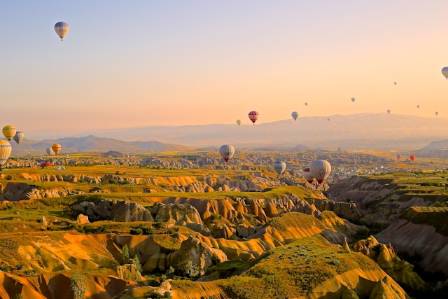
Cappadocia, located in central Turkey, is renowned for its otherworldly landscapes, ancient history, and rich culture. Known for its unique rock formations, underground cities, and vibrant local traditions, this region attracts travelers seeking both adventure and serenity. From ancient cave churches to picturesque valleys and enchanting fairy chimneys, here are seven of the best places to visit in Cappadocia.