← डेस्क पर लौटें4 मिनट का ब्रिफ

फुल ब्रिफ

5 Robots Changing Manufacturing Foreve

Global demand for goods is on a steady rise — a trend that can leave factories struggling to keep pace. In such scenarios, where manufacturing firms need to enhance productivity, they turn to advanced technologies like robotics to boost their production capacity.

J

John Carter

डेस्क रिपोर्टर

कॉन्टेक्स्ट

पढ़ते समय संदर्भ नोट्स साथ रखे गए हैं।

लाइन

डेली सिग्नल
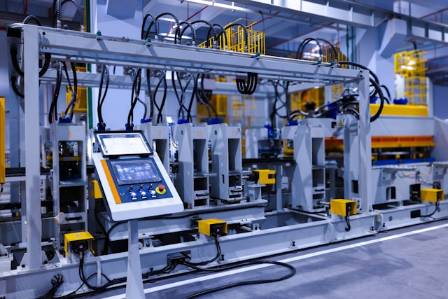
Global demand for goods is on a steady rise — a trend that can leave factories struggling to keep pace. In such scenarios, where manufacturing firms need to enhance productivity, they turn to advanced technologies like robotics to boost their production capacity.
Today, robots are exerting a profound influence on the global industrial landscape, as developers integrate breakthroughs such as artificial intelligence (AI) into robotic systems. In many cases, cutting-edge robots are revolutionizing the way goods are manufactured. Below are five types of robotic technologies that have transformed — and continue to reshape — the manufacturing industry:

1. Collaborative Robots

Collaborative robots, commonly referred to as cobots, are specially engineered to work alongside humans in factory settings. They primarily take on tasks where human involvement remains essential but traditional industrial robots would be too hazardous or impractical to deploy.
Some cobots take the form of mechanical arms used to transfer parts from storage to workstations, while others handle tasks like packaging finished products or palletizing items.
Due to their close proximity to human workers, cobots are equipped with unique safety features. For instance, some cobots have adjustable motion programming that enables gentle movements tailored to specific tasks. Others are fitted with sensors that detect human presence in their path and trigger an emergency stop. These safety mechanisms allow cobots to work alongside human colleagues or seamlessly hand off tasks without posing injury risks.

2. Autonomous Mobile Robots (AMRs)

Autonomous Mobile Robots (AMRs) are capable of navigating factory environments independently, without the need for human operators. These robots leverage machine vision — a type of AI — to “perceive” their surroundings. With this technology, AMRs can detect obstacles and human movements, then plan optimal navigation paths. This capability enables them to move freely throughout facilities on their own.
In manufacturing and warehouse environments, AMRs are primarily used for material transportation. Developers often design these robots to carry heavy loads that would typically require multiple workers or heavy-duty equipment to move.

3. Industrial Robot Arms

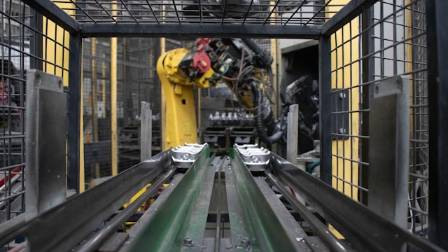
Industrial robot arms handle heavy payloads in factories that produce large-scale goods, such as industrial equipment and automobiles. Within these facilities, these arms transport heavy components from one area of the plant to another. They may also hold parts in place during processing or inspection. Some of the most robust industrial robot arms can effortlessly lift thousands of pounds.
Most of these robots operate via pneumatic power systems, which generate compressed air and deliver it to actuators (or motors) to drive and control the arm’s movements.
Despite their size and weight, industrial robot arms can also achieve high precision. However, they are typically enclosed in safety cages or restricted from applications where workers need to be in close proximity — a precaution dictated by the potential dangers posed by their immense power.
Many industrial robot arms also feature specialized coatings that enable them to operate in extreme conditions. These coatings may provide acid resistance or heat tolerance, allowing the arms to function in metal processing plants that handle acidic or corrosive chemicals.

4. Robots With Machine Vision

Machine vision technology is also empowering other types of robots to perform routine inspection tasks.
A key example is quality control robotics. These robots use AI to visually identify defects in inspected parts. They can also detect components that fail to meet specifications — such as parts that are too long, too short, or have visible flaws. If a problem is detected, the robot can remove the defective part from the production line, preventing it from being incorporated into finished products or disrupting the manufacturing process.
These robots are particularly popular among manufacturers because quality control is one of the most tedious stages in the production process. Robots equipped with machine vision can assist quality control workers or free them up to focus on higher-priority tasks. This capability streamlines the overall manufacturing process, enhances efficiency, and improves working conditions for employees.

5. Robotic Blacksmithing

Also known as metamorphic manufacturing, robotic blacksmithing is an emerging alternative to traditional production methods. Currently, most manufacturers rely on techniques like conventional machining or additive manufacturing processes such as 3D printing.
This innovative manufacturing method combines specialized tools, robotic arms, and sensors to reshape metal and other materials. The robotic blacksmith uses its sensors to detect the shape of the object while applying heat and pressure via lasers and its mechanical arms.
Unlike machining (which removes material) or 3D printing (which builds material layer by layer), robotic blacksmithing reshapes entire components. This unique feature results in significantly less waste compared to other manufacturing forms. As a result, it is an ideal solution for businesses seeking to make their factories more sustainable and resource-efficient.

Robots Are Changing How Factories Work
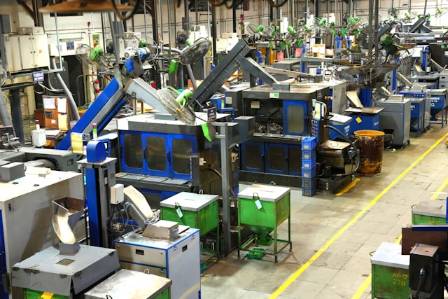
Industrial producers are actively seeking ways to keep up with growing global demand, and many have turned to state-of-the-art robotics to achieve this goal.
These advanced robots include cobots designed for human-robot collaboration and heavy-duty industrial arms. By working alongside human workers and reducing waste in the production process, they can boost productivity and enhance efficiency. Looking ahead, as global demand for goods continues to grow, these robots are likely to become an even more ubiquitous presence on factory floors worldwide.

अगली रिपोर्टें

Discovering the Top 4 Natural Wonders of British Columbia

Discovering the Top 4 Natural Wonders of British Columbia

British Columbia is home to some of the most breathtaking natural wonders on the planet. From towering mountains to serene lakes, the province offers a rich tapestry of landscapes that beckon adventurers and nature lovers alike. Here, we explore four of the most remarkable natural attractions you won't want to miss.

Harnessing Morning Sunlight: 7 Potential Advantages for Your Well-Being

Harnessing Morning Sunlight: 7 Potential Advantages for Your Well-Being

Ever pondered why the morning sun holds a special allure? Delving into the science, it appears that the benefits triggered by sunlight in the morning extend beyond mere warmth. The morning sun, with its impact on our body's internal mechanisms, hormone regulation, and mood, unfolds several health advantages. Here are nine reasons why embracing morning sunlight proves particularly beneficial:

हाई-स्पीड रेल: वैश्विक परिवहन और बुनियादी ढांचे को फिर से आकार देन

हाई-स्पीड रेल: वैश्विक परिवहन और बुनियादी ढांचे को फिर से आकार देन

हाई-स्पीड रेल (एचएसआर) आधुनिक परिवहन को फिर से परिभाषित कर रहा है, जो पारंपरिक रेल और राजमार्ग प्रणालियों के लिए तेजी से, अधिक टिकाऊ और अत्यधिक कुशल विकल्प प्रदान करता है। जैसा कि शहरीकरण और जनसंख्या वृद्धि कुशल पारगमन समाधानों की मांग को बढ़ाती है, दुनिया भर में उच्च गति वाली रेल परियोजनाएं एक अभूतपूर्व दर पर विस्तार कर रही हैं। कैलिफोर्निया की लंबे समय से प्रतीक्षित प्रणाली से लेकर भारत के महत्वाकांक्षी गलियारों तक, ये विकास बुनियादी ढांचे में क्रांति लाने, भीड़ को कम करने और आर्थिक एकीकरण को बढ़ाने के लिए निर्धारित हैं।

13 Outstanding Doughnuts, Ranked From Great to Legendary

13 Outstanding Doughnuts, Ranked From Great to Legendary

Fried dough has taken countless forms throughout history, but some versions stand out above the rest. This list narrows down a baker’s dozen of the most iconic and delicious doughnuts—each beloved for its flavor, nostalgia, or pure decadence.

अब तक के 10 सबसे प्रतिष्ठित वोक्सवैगन बीटल मॉडल

अब तक के 10 सबसे प्रतिष्ठित वोक्सवैगन बीटल मॉडल

वोक्सवैगन बीटल, बिना किसी संदेह के, अब तक बनाई गई सबसे प्रतिष्ठित कारों में से एक है। सबसे पुराने नामप्लेट में से एक के रूप में, समय के साथ कार के कई अलग-अलग मॉडल आए हैं। हालाँकि उनमें से सभी सही या लोकप्रिय नहीं रहे हैं, लेकिन बीटल एक क्लासिक कार है जिसे आज भी उत्साही लोग पसंद करते हैं। इस सूची में, हम वोक्सवैगन बीटल के विभिन्न मॉडलों पर नज़र डालेंगे, जो इतिहास के 10 सबसे प्रतिष्ठित मॉडल हैं।

7 Penguin Truths Hidden for a Century

7 Penguin Truths Hidden for a Century

George Murray Levick, the world’s first penguin biologist to conduct close-up research on a large colony, was stranded in 1911 for nearly a year at Cape Adare in Antarctica—home to the planet’s biggest Adélie penguin colony. During his time there, he compiled a wealth of insights while carrying out the first rigorous study of these aquatic birds.